Youngstown State University Blog

Holding the Past in Your Hands: The Value of Archival Research in Literary Studies

What can you learn from holding a manuscript written by one of your favorite authors? I recently had this experience when I was able to hold a very special letter written by Robert Burns, a Scottish poet whose life and works I have been writing about for over thirty years. I am primarily a textual literary critic, so working with manuscripts has always been a major part of my research.

Manuscripts come in several forms, such as drafts of poems or stories, letters to friends and family, lists of ideas or inspirations, random jottings and notes, among many others. Such documents can give you great insight into a writer’s thought process and writing techniques, revealing how an author tries out ideas, asks for feedback, and just figures it out. These steps should be familiar to all writers, and they form a valuable part of literary history that can often only be found in archival manuscripts.

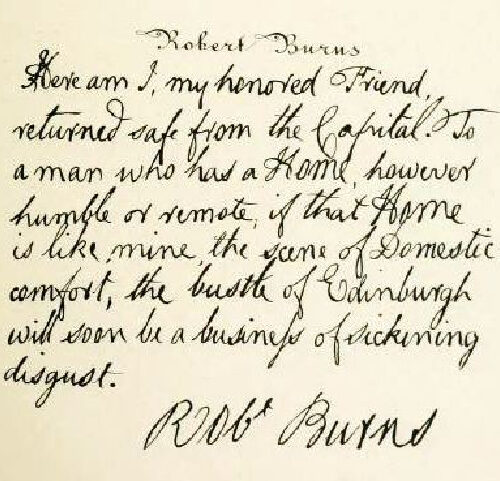
Handwriting of Robert Burns

My current research on Robert Burns focuses on how his life story has been told and retold from the eighteenth to the twenty-first centuries, in conventional biographies and imagined biofictions. Burns’s life has been the subject of numerous biographers and creative writers because it was a major part of his celebrity during his brief life from 1759 to 1796. Hailed as a “heaven-taught ploughman,” Burns grew up in a farming family in Ayrshire, Scotland, spending much of his youth laboring in the fields. He emerged in the literary world in 1786, publishing a collection of poems in English and Scots (a national dialect) that made him an overnight sensation throughout Great Britain. Readers were extremely curious about how the young farmer came to have such great poetic gifts. Where did his “genius” come from? How was it even possible that such an obscure figure could have such talent and skills? Could it be the work of “Heaven” alone?

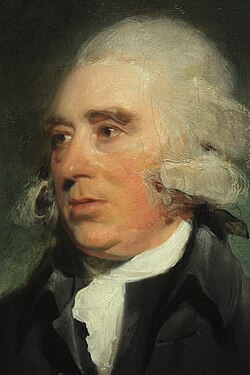
Dr. John Moore portrait

Inevitably his biography was plumbed for answers, a process that actually began with Burns himself. On Aug 2, 1787, he wrote a long autobiographical letter to Dr. John Moore, an eminent physician and author who was a close friend of Burns’s patron Frances Dunlop. In this letter, Burns tries to provide answers to the questions above, isolating various incidents and people in his life whose influence helped to shape his writing and inform his worldview.

I have read and reread this letter dozens of times, so much so that I know most of it by heart. It is an often humorous and witty piece of writing, and it offers a crucial perspective of Burns’s own understanding of the life he was leading.

Prior to this past summer, I had never had the opportunity to see the actual manuscript of this immensely important letter. Owing to the generosity of the Reeder family (sponsors of the Grace Ruth Endowed Professor of English), I was able to visit several archives in Great Britain to conduct research for my book project.

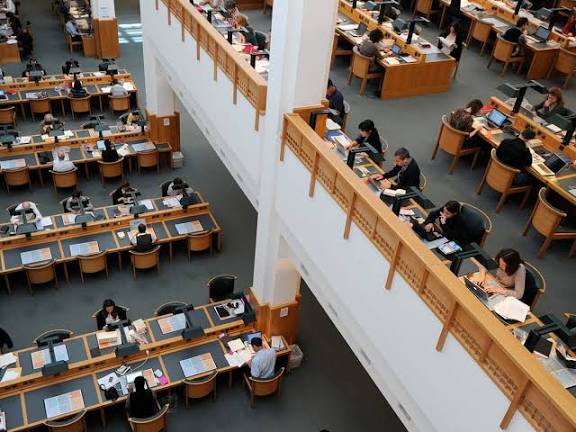
British Library Reading Room

The autobiographical letter to Moore was my Holy Grail; housed in the British Library in London, the letter requires special permission to view and cannot be photographed. Once I had secured the necessary permits, I found myself sitting in a reading room and holding the very letter that I had read and reread so many times, this time in Burns’s own handwriting on paper that he had once held.

It is hard to express how meaningful such an experience can be, how alive it makes your author become, even if he’s been dead for over two centuries. I spent several hours with the letter, intensely studying the physical manuscript: the smooth calligraphy of the handwriting interspersed with blots of ink, blank spaces where he paused to think before he started to write again, in darker ink this time signifying a considerable period of time had elapsed.

This was a true working document, one that took much time and effort for Burns to compose. The manuscript revealed his awareness of the importance that the autobiography he was writing would serve for posterity’s sake. This physical letter, preserved in the archive, had much more to tell me about Burns’s life story than I could ever have learned by simply reading a transcription. It gave me necessary knowledge about how Burns really saw himself, what he wanted to share and explain about his

character, his talents, and his life. I would never have been able to gain this perspective without seeing the letter itself, holding it in my hands and studying it as carefully as I could.

This is a special gift that only manuscripts in archives can offer. If you want a closer connection to past writings, whether they are literature or history, take a visit to the archives at YSU. Indeed, working with manuscripts can give you an invaluable perspective about how you see and understand the past, especially when you’re holding it in your hands.

Corey Andrews, Professor of English, Youngstown State University

Dr. Corey Andrews
Get in touch

872 Arch Ave.
Chaska, Palo Alto, CA 55318
hello@example.com
ph: +1.123.434.965

Work inquiries

jobs@example.com
ph: +1.321.989.645